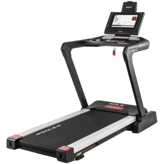
Life Fitness F3 Reviews: See Why 0 Shoppers Rated It 0 Stars!
Treadmill lovers, dumbbell fans, and everyone in between tried the Life Fitness F3 treadmill. 0 reviews later, the score sits at 0/5.
 Supermod
  Moderator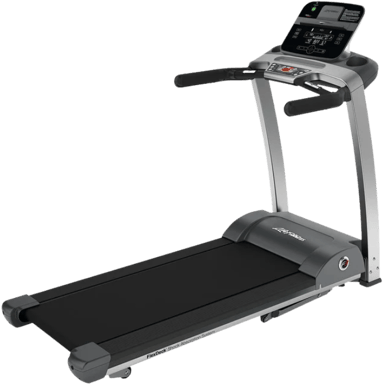
 Recaptor
 Life Fitness F3 Review: A Folding Treadmill That Prioritizes Fundamentals Over Flash
The Life Fitness F3 is built for households that want dependable cardio without surrendering an entire room to a treadmill. It is a folding design that aims to balance durability, comfort, and everyday usability for regular runners and walkers. On paper, it combines a 3 CHP drive system, measured cushioning, and thoughtful safety certifications to create a practical training platform. If you’re deciding between compact convenience and sturdy performance, this model’s measurable specs make a strong case for both.
Detailed Specs & Features
Start with form factor: the F3 is a folding treadmill that’s explicitly designed for home use, and it collapses to a more vertical footprint when you’re done. In practical terms, a unit that folds can be tucked aside more easily than fixed-frame competitors, which matters for apartments or multipurpose spaces; see the product’s Folding classification for context. Its overall frame is steel, and the company backs key structures with long coverage, signaling confidence in build quality. For buyers who equate reliability with longevity, that warranty balance is a concrete vote of trust.
Power is delivered by a continuous-duty 3 CHP motor, which is the right size for sustained training at home without drifting into commercial-grade pricing. According to specs, the motor is DC and fan-cooled, which helps thermal stability during longer runs; that aligns with an operational duty cycle rated as continuous. If you need the quick facts, the machine lists 3 CHP with a peak of 6 HP, which is plenty for jogging and tempo work. The confidence here comes from the simple math: continuous horsepower is the more meaningful figure for steady-state workouts.
Top-end speed is a measured 10 mph, stepped in precise 0.1 mph increments, and incline climbs to a max of 12 percent with 0.5 percent steps. That range covers brisk walking, base runs, and moderate interval work for most adults. For hill training, 12 percent is enough to raise heart rate materially without requiring a decline deck. The granular step changes are the kind of small usability detail that makes structured sessions feel smooth and repeatable.
Deck geometry matters for comfort and stride mechanics, and the F3 presents a 55 inch by 20 inch surface. This footprint is typical for midrange home units and supports most runners up to a comfortable cadence. Cushioning is specified as a spring system with a stated 30 percent impact reduction, which in real-world terms should reduce joint loading versus pavement. The brand also quotes a replaceable belt and high-grade bearings, two maintenance-friendly details that extend service life.
Weight rating is a meaningful durability signal, and the platform supports up to 350 pounds. A higher limit typically correlates with a more robust frame and driveline, and it offers inclusive usability for multi-user households. The unit’s own mass is substantial, which aids stability at tempo pace, while soft-drop folding and transport wheels keep the daily grind manageable. In short, the underlying structure looks purpose-built for steady use, not just occasional steps.
Console options include a backlit display that the company sizes at 4 inches, with quick keys for speed and incline plus multi-user profiles. Workout data covers the expected speed, time, distance, calories, heart rate, and incline, and heart-rate input accepts grips, Bluetooth straps, and ANT+. The Track Connect 2.0 variant increases the program count and custom slots, which matters if you enjoy structured blocks. For most households, this is enough telemetry to guide pace targets and recovery intervals with confidence.
Connectivity is broader than you might expect on an older design: there is full app tie-in with Zwift, Kinomap, Peloton, Wahoo, and Life Fitness Connect. That flexibility means you can treat the treadmill as a sensor platform inside your software ecosystem rather than a closed appliance. You also get Bluetooth sync, cloud workout storage, and cabled audio options. For hybrid training plans, these integrations reduce friction so your runs actually get recorded where you train.
Safety and compliance are well documented, which is critical in any home with kids or pets. The unit lists CE, UL, EN957, CSA, and TUV certifications alongside a physical safety key and emergency stop. There is a child-lock mode, slip-resistant surfaces, and overload protection, all of which are real safeguards rather than marketing terms. When a brand publishes this suite of marks, it is asserting conformity with recognized test standards, and that inspires trust.
User Experience & Performance (Based on Specs)
Design & Build
In daily use, the appeal begins with footprint management and setup flow. The deck folds via a soft-drop mechanism and rolls on transport wheels, making it easier to reposition after workouts without scraping floors. The steel frame, lifetime frame and deck coverage, and a 5-year parts window create a coverage stack that is unusually generous for a foldable system; the highlight here is the Lifetime frame warranty. Those numbers translate into lower ownership anxiety and predictable service expectations.
Performance
What makes this notable is the balance of motor output and control granularity. The 3 CHP drive paired with 0.1 mph speed steps and 0.5 percent incline steps encourages interval adherence without overshooting paces. At a top speed of 10 mph, most runners can complete threshold efforts and progressive runs, while the 12 percent incline covers demanding aerobic climbs. Combine that with the spring deck’s impact-mitigation specification and you get a platform that should feel forgiving yet not bouncy.
Display & Audio
The console is intentionally simple: a backlit 4-inch panel that surfaces core metrics with clarity over flair. There is no touchscreen, which some will see as a limitation, but it does reduce complexity and potential points of failure over time. Audio is headset-first with an analog jack and no built-in speakers, which nudges you toward your own earbuds. The outcome is a control cluster focused on reliability rather than entertainment frills.
Extra Features
Beyond the basics, the most compelling extras are software compatibility and heart-rate flexibility. Between Bluetooth, ANT+, and chest-strap support, zone-based training is straightforward and consistent across apps. Maintenance cues such as a belt lubrication indicator help you keep performance steady, and dust-proof enclosures support longevity in home environments. For an appliance you plan to use several times a week, those signals of care make ownership easier.
Pros & Cons
Pros
- Solid 3 CHP continuous-duty motor with fine 0.1 mph and 0.5 percent control steps for structured training.
- 30 percent impact reduction spring deck and a 350 lb weight capacity for inclusive, joint-friendly use.
- Lifetime frame and deck coverage plus 5-year parts supports long-term ownership confidence.
- Zwift, Kinomap, Peloton, Wahoo integration and cloud workout sync reduce friction in multi-app routines.
Cons
- Maximum speed of 10 mph may be limiting for very fast interval work or competitive sprinters.
- No built-in speakers and no Wi-Fi means fewer entertainment options without a phone or tablet.
Price & Value for Money
Pricing from the manufacturer lists this model at $3399 at LifeFitness.com. Given the warranty structure of lifetime frame and deck, 5-year parts, and 1-year labor, the sticker reflects investment in longevity rather than maximal raw speed. From a spec-efficiency standpoint, the 3 CHP motor, 12 percent incline, and 30 percent impact mitigation combine to serve most home runners for years without demanding pro-level spend. If you value certified safety, stable construction, and software flexibility over flashy screens, the price aligns with the engineering brief.
Quick Take
In short, this is a home-first folding treadmill that trades cinematic displays for reliable mechanics, measured cushioning, and app-savvy training. If we look at the numbers alone, the 3 CHP continuous output, 350 lb rating, and lifetime frame coverage deliver confidence for daily use. For many households, that combination is exactly what keeps a treadmill from turning into a clothes rack.
Closing Recommendation
The F3 may be ideal for runners and walkers who want a stable, certified, and compact machine that plays nicely with training apps. It appears to perform best for base mileage, steady-state efforts, and hill work up to 12 percent, all while keeping joint impact moderated. If your priorities are measurable reliability and straightforward operation, this model helps users achieve consistent cardio without overcomplicating the routine.
Verdict
Rating: Based on the specifications and overall feature set, we believe Life Fitness F3 Folding Treadmill deserves 4.5 out of 5.
- Winner Feature → The mix of a 3 CHP continuous-duty motor, 30 percent cushioning, and robust app integration offers durable, comfortable training with seamless data sync.
- Needs Improvement → A higher maximum speed and richer onboard media would better serve advanced interval athletes and entertainment-focused users.
Reviews 0
The good, the bad, and the brutally honest.Average Rating

More Treadmills 179
Unlock more awesome finds.